
In the complex world of modern business, there’s a counterintuitive truth emerging: less is more. While companies pile on features, clauses, and information in their communications, the most successful businesses are discovering that simplicity isn’t just elegant – it’s a powerful growth engine.
The 3% Rule: Why Your Documents Are Overwhelming Your Partners
Consider this startling fact: research shows that business partners use only 3% of the information found on a typical invoice. Think about that for a moment. Ninety-seven percent of what you’re including in your core business documents is noise, not signal.
This isn’t just inefficient – it’s actively harmful to your business relationships. When partners struggle to find essential information buried in cluttered documents, frustration builds, payment delays increase, and trust erodes. Every unnecessary line item, redundant clause, or confusing layout creates friction in what should be smooth business interactions.
The Invoice Revolution: Where Simplicity Meets Growth
The invoice, as the fundamental document in business communication, presents the perfect case study for transformation. When you strip away the unnecessary and focus on what truly matters, something remarkable happens: your business partners take notice.
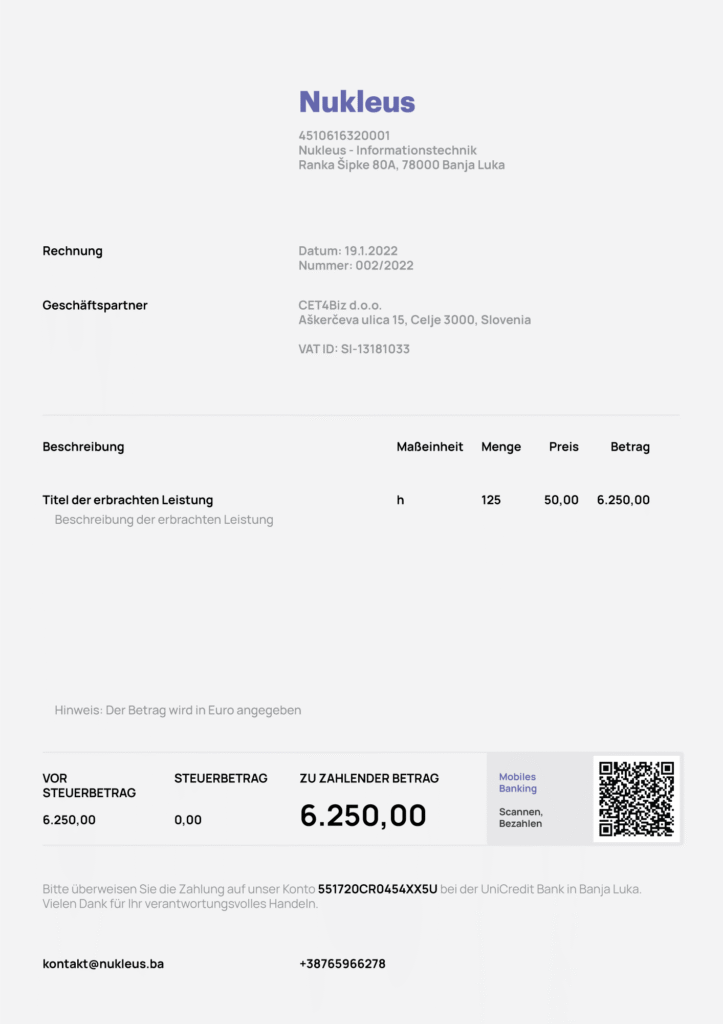
What Partners Actually Need:
- Clear payment terms and amounts
- Due dates and payment methods
- Contact information for questions
- Essential project or product identifiers
What Creates Confusion:
- Dense legal text repeated on every document
- Multiple reference numbers with unclear purposes
- Excessive branding and marketing messages
- Redundant contact information
- Unnecessary technical specifications
Content Choreography: Designing Information Flow
The art of document simplification isn’t about removing information randomly – it’s about content choreography. Just as a choreographer designs every movement to serve the performance, effective document design ensures every element serves a purpose in the communication flow.
This means:
- Leading with what matters most (payment amount, due date)
- Creating visual hierarchy that guides the eye naturally
- Grouping related information logically
- Using white space as a design element, not wasted space
- Choosing clarity over completeness when the two conflict
Breaking the Habit Barrier
The biggest obstacle to document simplification isn’t technical – it’s psychological. As creatures of habit, we resist change even when that change benefits us. This resistance manifests in several ways:
- “We’ve always done it this way” mentality
- Fear of legal vulnerability from removing standard clauses
- Assumption that more information equals more professionalism
- Reluctance to trust partners to ask for additional details when needed
Overcoming this requires a mindset shift from “comprehensive” to “considerate.” The goal isn’t to hide information but to prioritize your partner’s time and attention.
The Simplicity Advantage: Measurable Business Benefits
Companies that embrace document simplification report tangible improvements:
Faster Payment Cycles
When invoices are easy to process, payments arrive faster. Partners can quickly verify amounts, understand terms, and initiate payment without internal back-and-forth about document interpretation.
Enhanced Professional Image
Counterintuitively, simpler documents often appear more sophisticated than cluttered ones. Clean, focused communication signals confidence and competence.
Reduced Support Requests
When documents are self-explanatory, partners need fewer clarifications. This reduces your administrative burden while improving partner satisfaction.
Stronger Business Relationships
Partners appreciate businesses that respect their time. Simple, clear communication demonstrates that you understand their operational pressures.
Implementation Strategy: Making the Transition
Start Small
Begin with your most frequent documents – invoices, proposals, or contracts. Test simplified versions with trusted partners and gather feedback.
Measure Impact
Track metrics like:
- Time from invoice to payment
- Number of clarification requests
- Partner satisfaction scores
- Internal processing time
Iterate Based on Feedback
Use partner input to refine your approach. What seems clear to you might still be confusing to others.
Scale Gradually
Once you’ve proven the concept with core documents, expand the simplification approach to other business communications.
The Competitive Edge of Clarity
In a world where everyone is fighting for attention, businesses that communicate clearly stand out. Your simplified documents become a differentiator—a signal that you’re a company that “gets it.” Partners begin to prefer working with organizations that make their lives easier, not more complicated.
This preference translates into real business advantages: renewed contracts, referrals to other potential partners, and a reputation for professionalism that attracts higher-quality business relationships.
Conclusion: Simplicity as Strategy
Document simplification isn’t about dumbing down your communications – it’s about respecting your partners’ intelligence and time. When you focus on delivering exactly what they need, exactly when they need it, you transform routine business interactions into relationship-building opportunities.
The businesses that embrace this approach don’t just survive in competitive markets – they thrive. They become the partners that others want to work with, the vendors that get paid fastest, and the companies that grow through the strength of their relationships.
In the end, simplicity isn’t just about making documents easier to read. It’s about making business easier to do. And in today’s complex world, that’s the ultimate competitive advantage.
Ready to transform your business communications? Start with your next invoice. Remove one unnecessary element, clarify one confusing section, and see how your partners respond. Small changes in simplicity can yield big results in business growth.