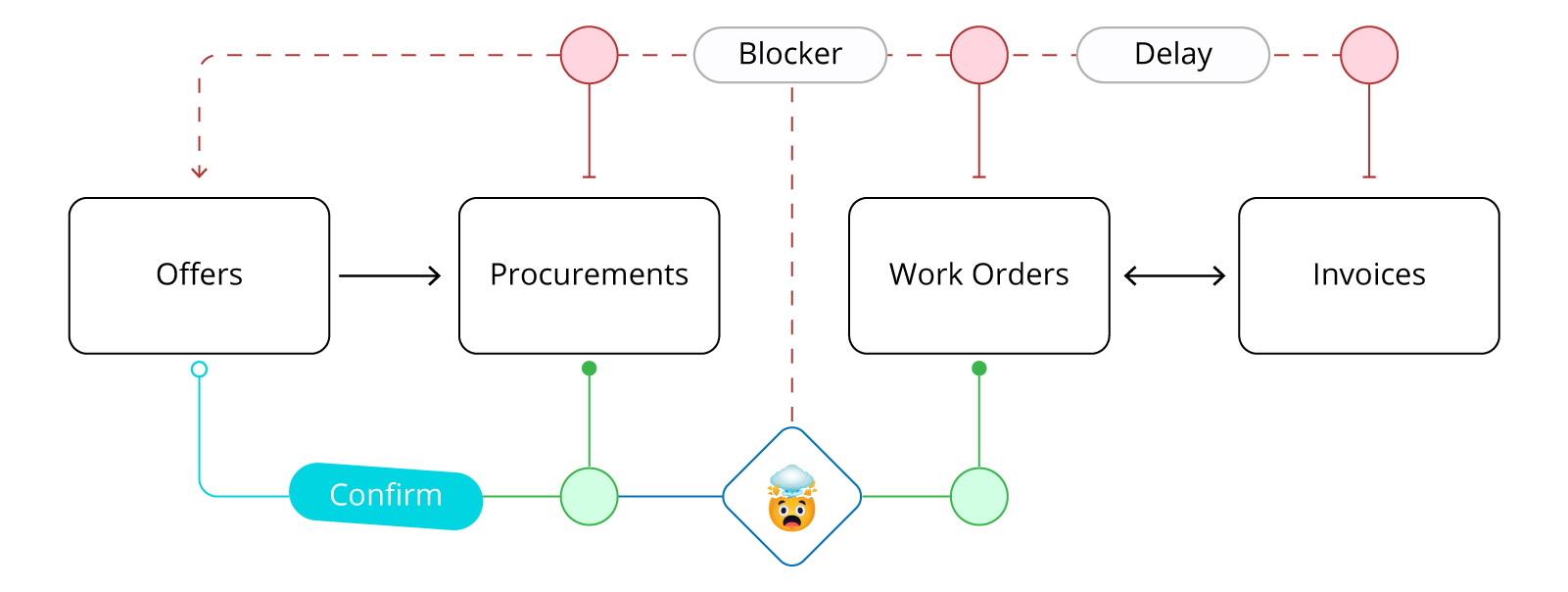
I remember sitting in a cardboard packaging facility at 2 in the morning, staring at a whiteboard covered in process diagrams that made no sense to anyone except the person who drew them. The production manager was explaining – for the third time – why they couldn’t start a job even though the materials had been sitting in the warehouse for two days.
Nobody knew the materials had arrived.
This wasn’t a technology problem. It was a Business Process Management problem. And after 20 years of working with manufacturers across Europe, I’ve seen this exact scenario play out dozens of times in different industries.
Here’s what actually goes wrong in manufacturing BPM – and more importantly, what you can do about it.
Mistake #1: Treating Departments Like Islands
Most manufacturing companies organize their BPM around departments. Sales has their process. Procurement has theirs. Production has theirs. And they all kind of… hope things connect at the edges.
They don’t.
We worked with a client (the cardboard packaging facility I mentioned) where the sales manager would verbally – yes, verbally – tell someone in procurement what materials to order. Procurement would place orders based on unclear specifications. Materials would arrive. Warehouse would store them. And production would create work orders without knowing if materials were even available.
Four separate processes. Zero integration. Complete chaos.
The real problem wasn’t that people were lazy or incompetent. Everyone was working hard. But they were working in silos, with each department optimizing their own little piece without seeing the bigger picture.
And here’s the thing – you can’t BPM your way out of this by just documenting existing processes better. You need to fundamentally rethink how information flows between departments.
Mistake #2: Confusing Documentation With Integration
I see this constantly. Companies invest thousands in process documentation. Beautiful flowcharts. Detailed procedure manuals. Everything documented to ISO standards.
But still, production grinds to a halt because someone didn’t get a phone call.
Documentation doesn’t equal integration. You can document a broken process perfectly – it’s still broken.
Real BPM integration means data flows automatically from one process step to the next. When a sale is confirmed, procurement should automatically see material requirements. When materials arrive, production planning should know immediately. When production completes, invoicing should trigger without someone making a phone call.
This sounds obvious when you say it out loud. But you’d be surprised how many manufacturers are running on what I call “verbal integration” – where the connection between process steps is literally someone walking across the facility to tell someone else something happened.
Mistake #3: Prioritizing Financial Accounting Over Material Accounting
Here’s a controversial opinion: most manufacturing companies focus on the wrong type of accounting.
Everyone obsesses over financial accounting. Revenue, costs, margins. All tracked meticulously. But ask them where a specific pallet is, or when materials will be available for a production run, and you get shrugs.
Material accounting – knowing what you have, where it is, and when you’ll need more – is actually more critical for day-to-day operations than financial accounting. Yet most BPM implementations treat it as an afterthought.
In that cardboard facility project, we flipped this priority. Material accounting became the primary system. Financial accounting became a byproduct of accurate material tracking. When you know exactly what materials went into production, when they were used, and at what cost, financial accounting basically handles itself.
But you can’t do it the other way around. You can’t start with financial data and work backwards to understand material flows. Well, you can try. It just doesn’t work very well.
Mistake #4: Building Processes Around Office Workers, Not Production Workers
Most BPM systems are designed by people who work at desks. For people who work at desks.
The production floor gets an afterthought. Maybe a printout of a work order. Maybe a clipboard. Definitely nothing real-time.
This is backwards. The production floor is where value gets created. That’s where your BPM system should be most robust, most user-friendly, most real-time.
We designed the manufacturing module in that cardboard project specifically for tablets on the production floor. Simple interface. Big buttons. Real-time updates. Scan a QR code, update quantities, document quality issues, done.
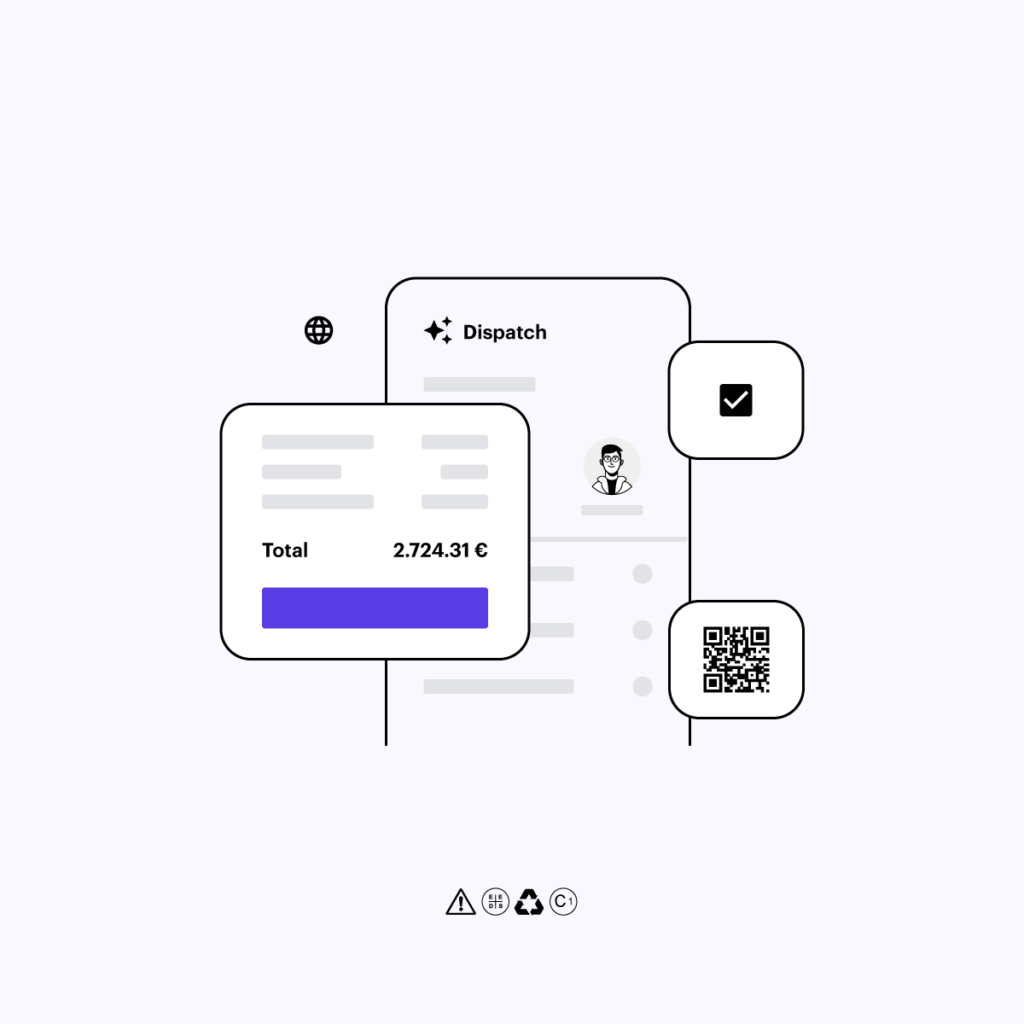
And yes, this required some sleepless nights to get right. Production workers don’t have patience for complicated interfaces. They need something that works the first time, every time, without making their job harder.
The warehouse got PDA devices with barcode scanning. Same principle – make it easier to do the right thing than to work around the system.
When your BPM makes life easier for the people creating value, they actually use it. Novel concept, I know.
Mistake #5: Implementing Everything At Once
This might be the biggest mistake of all.
Companies decide they need integrated BPM. They scope out this massive system that’ll fix everything. They plan a “big bang” implementation where they’ll switch everything over on one glorious Monday morning.
Six months later, they’re still trying to migrate data. A year later, people are still using the old Excel spreadsheets “just in case.”
Modular implementation works better. Start with one critical process. Get it working. Prove the value. Then connect the next module.
For the cardboard manufacturer, we started with administration (master data) and operations (connecting sales to production). Got those solid. Then added manufacturing module. Then warehouse. Then comprehensive reporting.
Each module delivered immediate value while building toward the complete integrated system. People could see progress. They could adapt gradually. And we could adjust based on real-world usage rather than theoretical requirements.
What Actually Works: Real Integration
After that 2 in the morning whiteboard session, we spent six months transforming those four disconnected processes into one integrated platform.
Sales creates offers in the system. Approved offers become orders. Orders automatically calculate material requirements. Procurement requests generate based on actual inventory levels (which are tracked in real-time, not guessed at).
When materials arrive, warehouse scans them in. Production planning sees availability immediately. Work orders get created with full visibility into what materials are actually on hand.
Production updates happen on tablets on the floor. Real-time. When a job completes, the system knows. Inventory updates. Invoicing can trigger automatically.
One process. Not four.
And the result? Production delays from material availability basically disappeared. Procurement errors from unclear specifications dropped significantly. People stopped playing phone tag to figure out where things were.
Not because we implemented some revolutionary technology. We just connected things that should’ve been connected all along.
The Real Lesson
Business Process Management in manufacturing isn’t about buying software or hiring consultants to document your processes.
It’s about fundamentally rethinking how information flows through your operation. From sale to procurement to production to invoicing. As one connected system, not four separate islands.
The companies that get this right are the ones that can actually scale. The ones that can handle growth without just throwing more people at the problem. The ones where production planning is based on data, not phone calls.
The companies that don’t… well, they’re the ones calling us at midnight because their production is delayed and nobody knows why.
You probably have elements of this in your operation right now. Maybe procurement doesn’t know what production needs. Maybe production doesn’t know what’s in the warehouse. Maybe invoicing happens weeks after delivery because nobody tracked when jobs actually completed.
These aren’t technology problems. They’re process problems. And the solution isn’t better documentation or more meetings.
It’s integration. Real integration. Where data flows automatically and people can focus on making decisions instead of hunting for information.
That’s what BPM should do. Everything else is just documenting dysfunction.